Save big on top financial guides!

Budgeting Basics: A Simple System That Works
Learn a straightforward, step-by-step budgeting method using the 50/30/20 rule, plus tips on building an emergency fund and avoiding common pitfalls.
5/8/20241 min read
If you feel like your money disappears every month, you’re not alone. Most people don’t have a clear plan for their money—and that’s exactly why budgeting matters.
Budgeting isn’t about restriction. It’s about control.
When you know where your money is going, you can:
Reduce stress
Stop overspending
Start saving
Build financial confidence
Want the full system? Visit the complete Money Academy → /money-academy
🧠 WHAT IS BUDGETING?
Budgeting is simply a plan for your money.
Instead of wondering where your money went, you decide where it goes in advance.
That’s it.
No complicated systems. No spreadsheets required (unless you want them).
💡 WHY BUDGETING IS IMPORTANT
Without a budget:
You overspend without realizing it
You struggle to save
You feel financially stuck
With a budget:
You gain control
You make better decisions
You build momentum
👉 Budgeting is the foundation of financial success.
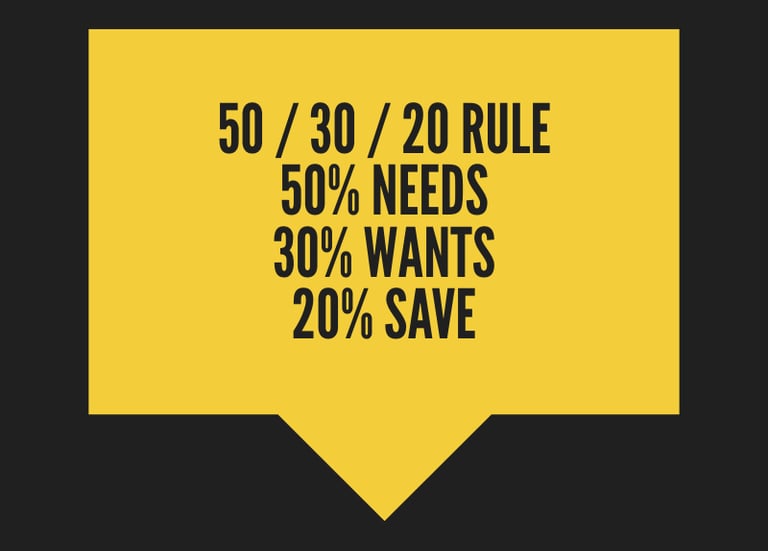
📊 THE SIMPLE BUDGETING SYSTEM (50/30/20 RULE)
This is one of the easiest ways to start budgeting.
50% Needs → rent, bills, groceries
30% Wants → eating out, entertainment
20% Savings → saving, investing, debt
👉 It’s simple, flexible, and beginner-friendly.
🧾 STEP-BY-STEP BUDGET PLAN
Follow this exact process:
1. Track Your Income
Know exactly how much money you bring in each month.
2. List Your Expenses
Write down everything you spend money on.
3. Categorize Spending
Separate needs, wants, and savings.
4. Cut Unnecessary Costs
Look for anything you don’t really need.
5. Assign Every Dollar
Give your money a purpose before you spend it.
💰 BUILD YOUR EMERGENCY FUND
Before anything else, build a safety net.
Start with:
$1,000 (beginner goal)
Then aim for:
3–6 months of expenses
This protects you from unexpected situations.
💡 HOW TO SAVE MORE MONEY
Simple ways to increase savings:
Automate transfers
Cancel unused subscriptions
Reduce impulse spending
Track purchases weekly
👉 Small changes add up quickly.
⚠️ COMMON BUDGETING MISTAKES
Avoid these:
Not tracking spending
Being too strict
Giving up too early
👉 Budgeting gets easier with consistency.
🔁 SIMPLE WEEKLY ROUTINE
Spend 10–15 minutes each week:
Review your spending
Adjust your budget
Stay on track
👉 This keeps everything under control.
🎁 FREE GUIDE SECTION
Get Your Free Money Guide
Download a simple step-by-step guide to start building your financial future.
100% free. No spam. Just simple financial strategies.
🔗 WHAT TO DO NEXT
Once your budget is in place:
Increase your income →
Start investing → /
Gary K Finance
Explore our sleek website template for seamless navigation.
Contact
Newsletter
© 2026. All rights reserved.
This website is for educational and informational purposes and is not intended to give financial advice. Some of the content here reflects my personal opinions and experiences, not professional investment recommendations. Investing and trading involve risk, and you may lose money. Just because something performed a certain way in the past does not mean it will perform the same way again. Any decisions you make are your responsibility, and it is recommended that you consult a qualified financial advisor before making significant ones. Some links on this website are affiliate links, meaning I get a commission if you purchase, at no cost to you